
About Bangalore
Bangalore, officially known as Bengaluru, is a city that effortlessly blends tradition with modernity, making it one of India’s most dynamic and vibrant metropolises. Situated in the southern part of India, Bangalore is the capital of Karnataka and is renowned for its pleasant climate, lush greenery, and thriving tech industry. When talking about Bangalore, it is often referred to as the “Silicon Valley of India” due to its role as a hub for innovation, education, and real estate, attracting people from across the country and the world. With a population of over 8.5 million, it is the third most populous city in India, and its influence as a cultural, economic, & technological center continues to grow.
I. Historical Significance and Development
A. Early Beginnings
Bangalore’s history dates back over a thousand years, with evidence of human habitation in the region since the stone age. The city’s name, Bengaluru, is believed to have been derived from the phrase “Benda Kaal Ooru,” meaning “town of boiled beans,” reflecting its agricultural heritage. The first recorded mention of Bangalore was in 890 AD, in a stone inscription found at the Nageshwara Temple in Begur.
B. The Founding of Modern Bangalore
Modern Bangalore began taking shape in 1537 when Kempe Gowda I, a feudal ruler under the Vijayanagara Empire, constructed a mud fort that laid the foundation for the city’s current layout. This fort, known as the Bangalore Fort, still stands as a testament to the city’s rich history. After the fall of the Vijayanagara Empire, Bangalore came under the control of various rulers, including the Mughals, Marathas, and the Kingdom of Mysore.
C. British Era and Beyond
In 1799, after the Fourth Anglo-Mysore War, Bangalore was captured by the British East India Company. The British influence led to the development of a cantonment area, which became a focal point for military and administrative activities. The city expanded rapidly during this period, and after India’s independence in 1947, Bangalore became the capital of the state of Mysore (later renamed Karnataka).
II. Bangalore’s Growth as a Technological Hub
A. The Rise of the IT Industry
Bangalore’s transformation into the “Silicon Valley of India” began in the late 20th century, as it emerged as the leading center for information technology (IT) in the country. The establishment of the Electronics City in the early 1980s marked the beginning of this revolution. Today, Bangalore accounts for more than 41% of India’s total IT exports, making it a pivotal player in the global tech industry.
B. Presence of Major Tech Giants
The city is home to the Indian headquarters of numerous multinational corporations, including Infosys, Wipro, and Tata Consultancy Services (TCS). Additionally, global tech giants such as Google, Microsoft, and Amazon have established significant operations in Bangalore. This influx of technology companies has not only bolstered the city’s economy but has also attracted a highly skilled workforce from around the world.
C. Innovation and Startups
Bangalore is also known for its thriving startup ecosystem, often being called the startup capital of India. The city hosts more than 7,700 startups, spanning various sectors such as fintech, e-commerce, and biotechnology. This vibrant entrepreneurial culture has made Bangalore a hotspot for venture capital investments and innovation.
III. Real Estate and Urban Development
A. Boom in Real Estate Market
The rapid growth of the IT sector has had a significant impact on Bangalore’s real estate market. The city has seen a surge in demand for both residential and commercial properties, driven by the influx of professionals and the expansion of tech companies. Areas like Whitefield, Electronic City, and Sarjapur Road have become prime locations for real estate investments.
B. Luxury Apartments and Affordable Housing
Bangalore offers a wide range of housing options, from luxury apartments with state-of-the-art amenities to affordable housing projects aimed at middle-income families. The trend towards affordable housing has gained momentum, with residential property values expected to increase by 5.5% annually. This makes Bangalore an attractive destination for real estate investments, both for domestic and foreign buyers.
C. Key Developments in West Bangalore
Today, significant developments are taking place in West Bangalore, particularly in areas like Yeshwanthpur. One such notable development is Godrej Yeshwanthpur, a new pre-launch residential apartment project by Godrej Properties. This project comprises spacious 3 BHK, 3.5 BHK, and 4.5 BHK apartments, offering luxurious living spaces in one of Bangalore’s rapidly developing regions. With top-class architecture and modern facilities, Godrej Yeshwanthpur stands out as a prime investment opportunity in the Bangalore real estate market.
D. Infrastructure Development
The city’s infrastructure has evolved to accommodate its growing population and economic activities. The launch of the Namma Metro has revolutionized public transportation, making it easier for residents to commute across the city. Additionally, the development of new flyovers, roads, and underpasses has improved connectivity to key areas like the Kempegowda International Airport and IT parks.
IV. Cultural and Social Life
A. Cosmopolitan Lifestyle
Bangalore is known for its cosmopolitan lifestyle, with a diverse population that includes people from different parts of India and the world. The city’s diverse population enriches its cultural landscape, influencing everything from its culinary traditions to the wide array of festivals celebrated throughout the year. The city is a melting pot of traditions and modernity, offering a unique blend of the old and the new.
B. Hub for Education and Research
The city is home to some of India’s top educational institutions, including the Indian Institute of Science (IISc), Indian Institute of Management Bangalore (IIMB), and National Institute of Fashion Technology (NIFT). These institutions have made Bangalore a center for education and research, attracting students and scholars from across the globe.
C. Sporting Culture
Bangalore has a rich sporting culture, with cricket being the most popular sport. The M. Chinnaswamy Stadium, located in the heart of the city, hosts international cricket matches and is the home ground for the Royal Challengers Bangalore (RCB) in the Indian Premier League (IPL). The city also has a vibrant football scene, with teams like Bengaluru FC making a mark in the Indian Super League (ISL).
V. Tourism and Natural Attractions
A. Garden City of India
Bangalore is often referred to as the “Garden City of India” due to its numerous parks, gardens, and tree-lined streets. The Lalbagh Botanical Garden and Cubbon Park are two of the city’s most famous green spaces, offering residents and visitors a serene escape from the urban hustle.
B. Weekend Getaways
The city’s location makes it an ideal base for exploring nearby natural attractions. Nandi Hills, located just 60 kilometers from Bangalore, is a popular destination for trekking and nature walks. Coorg, known for its coffee plantations and scenic landscapes, is another favorite weekend getaway. Additionally, Bangalore is close to several wildlife sanctuaries and national parks, such as Bannerghatta National Park and Nagarhole National Park.
C. Architectural Marvels
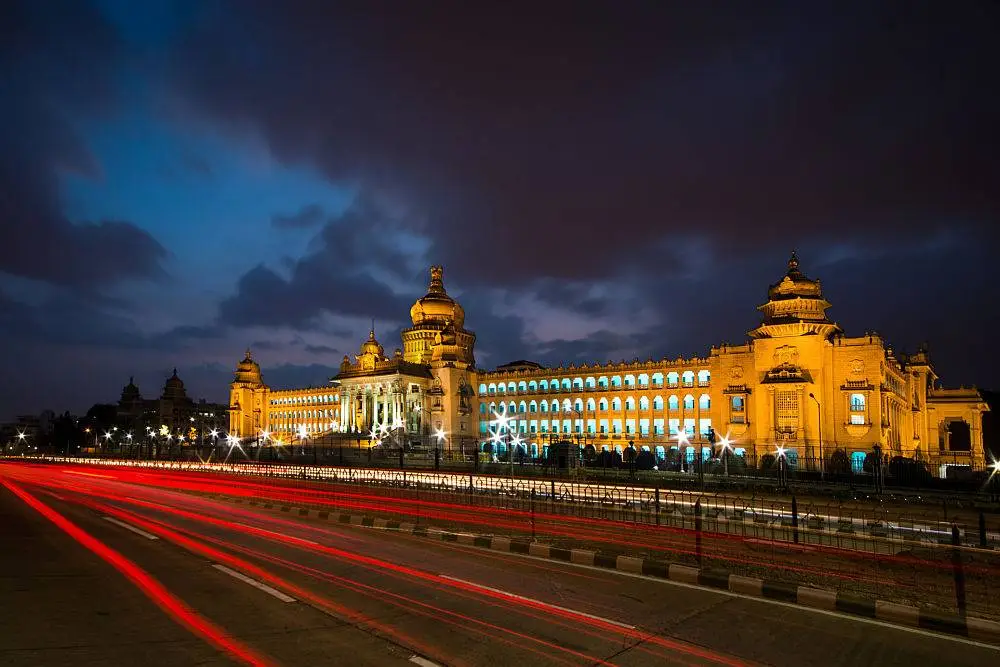
Bangalore boasts a rich architectural heritage, with landmarks such as the Bangalore Palace, Tipu Sultan’s Summer Palace, and Vidhana Soudha showcasing the city’s historical and cultural significance. These sites, along with modern architectural wonders like the UB City and the Infosys campus, reflect the city’s blend of tradition and modernity.
Conclusion
Bangalore is a city that has successfully embraced change while preserving its cultural heritage. When learning about Bangalore, it’s clear that from its origins as a small settlement to its current status as a global tech hub, the city continues to evolve, offering opportunities for growth and innovation. The city’s real estate market, particularly in areas like West Bangalore, presents promising investment prospects, driven by ongoing developments like Godrej Yeshwanthpur. With its rich history, dynamic economy, and vibrant cultural life, Bangalore is not just a place to live but a place to thrive.
FAQs - Frequently Asked Questions
The best time to visit Bangalore is during the winter months, from October to February, when the weather is pleasant and ideal for sightseeing and outdoor activities.
Bangalore is called the Silicon Valley of India because it is the leading center for IT companies and startups in the country, contributing significantly to India’s IT exports and innovation.
Some must-visit places in Bangalore include the Lalbagh Botanical Garden, Bangalore Palace, Tipu Sultan’s Summer Palace, and Nandi Hills.
The real estate market in Bangalore is booming, with high demand for residential and commercial properties, especially in areas like Whitefield, Electronic City, Sarjapur Road, and Yeshwanthpur.
The main language spoken in Bangalore is Kannada, but English and Hindi are also widely used, making the city accessible to people from different regions.